Puzl was originally a software development company. What was the reason for your pivot, and why did you turn to the office market?
We started as a software company about 13 years ago. At the time, we had just raised a round of investment, which was a significant milestone for us. Afterward, we felt it was time to move from the coastal city of Varna to Sofia to reach the next stage of our growth.
We were searching for an office, but we literally couldn’t find anything that suited our needs.
Eventually, we came across an old sewing factory, and I just fell in love with it. It clicked and when something clicks, you don't question it.
So, I called my investors and said: “Hey guys, look, we found this beautiful building. There's one floor available. It requires heavy renovation, but we know exactly what to do. I know I've never designed anything, and I’m not an architect, but please trust me — I have the vision, and I want to design it myself.”

The building was too big for us, we only needed one-third of it. But we wanted to renovate the whole area and invite other IT companies to join us. We wanted to create a community of like-minded IT professionals because it’s very important that we share the same challenges to help create deeper connections.
What kind of challenges?
As a startup, time is your most valuable resource. You don’t have much money, and every single mistake costs both time and money. I thought other IT companies would face similar issues and needs.
In a like-minded community, the chances are much higher that someone has already solved the problem you're dealing with, saving you both time and money.
That’s how it all began. The response from the community was exceptional: within five months, the space was fully occupied, and demand was overwhelming. We grew beyond our expectations, eventually reaching a capacity of 1,000 seats over eight years.
And now, here we are in Budapest, the starting point of our regional growth journey.
Why did you choose Budapest instead of Bucharest for your office? What made Budapest better?
It’s simple. We were deciding between Budapest and Bucharest, and we found the perfect building here — an old industrial textile factory in the heart of the city, with great vibes and beautiful potential. It wasn’t a quick or easy decision. We have over 50 factors that we consider important when selecting a building, such as accessible transportation, industrial character, and inspirational views.

This is just the beginning. Puzl’s mission is to connect IT across Central and Eastern Europe (CEE). This means creating physical locations that serve as homes for local IT communities in each CEE capital city. Additionally, we’re building a network, a virtual bridge to connecting these communities to support and help one another.
What impact do you expect to have on the ecosystem in time?
We hope to bring Budapest's IT community together, fostering collaboration and cooperation. In the short term, we aim to welcome 200 people to the floor that’s already open.
In the medium term, our goal is to expand to accommodate 850 people in this building, and connect Hungary’s IT community with Bulgaria’s, creating bridges between them and eventually across the entire CEE ecosystem.
We operate in a sector where companies grow fast. A startup that begins with just a few employees could grow to 100 or 200 people within our space and become a key player in the community and ecosystem. That would be a huge win for us.
Your solution to connect people across CEE isn’t just a surface treatment for the problem? The real wound what cause the fragmentation is beyond your capability, namely the fragmented legal systems regarded to startups in the EU’s states.
Every year, EU countries get closer to harmonization. New laws are adopted that help reduce these gaps.

What’s beautiful about IT and startups is that we share many similarities. We dress similarly, behave similarly, and hold similar beliefs. It doesn’t matter where you’re from.
The only things that matter are talent, hard work, open-mindedness, and a willingness to pursue your vision. These commonalities make it easier for us to connect.
What varies is the level of specialization. For example, Bulgaria has many great developers but lacks strength in design, product ownership, and scaling experience. Meanwhile, Hungary has a stronger design community and produces many creative minds. It’s a perfect match, isn’t it?
Puzl is a Bulgarian company, and Bulgaria recently achieved a milestone: it will hold the first-ever startup commissioner position in the European Commission. How do you think Bulgaria earned this recognition?
About ten or eleven years ago,
the European Union began creating venture capital funds to invest in IT and technology, aiming to strengthen Europe’s competitiveness against the US. Bulgaria was one of the pilot countries in Eastern Europe for this initiative.
Since then, Bulgaria has gained a significant advantage compared to other Eastern European countries. The startup culture has grown, innovation is thriving, and we have strong math education programs. Bulgarian students perform exceptionally well in international math competitions. I believe this foundation contributed to Bulgaria securing the startup commissioner position.

Ultimately, though, it doesn’t matter where you’re from. We need to move beyond the idea of “my country is better than yours.”
Our generation cares less about national borders and more about people, communities, and connecting based on shared values.
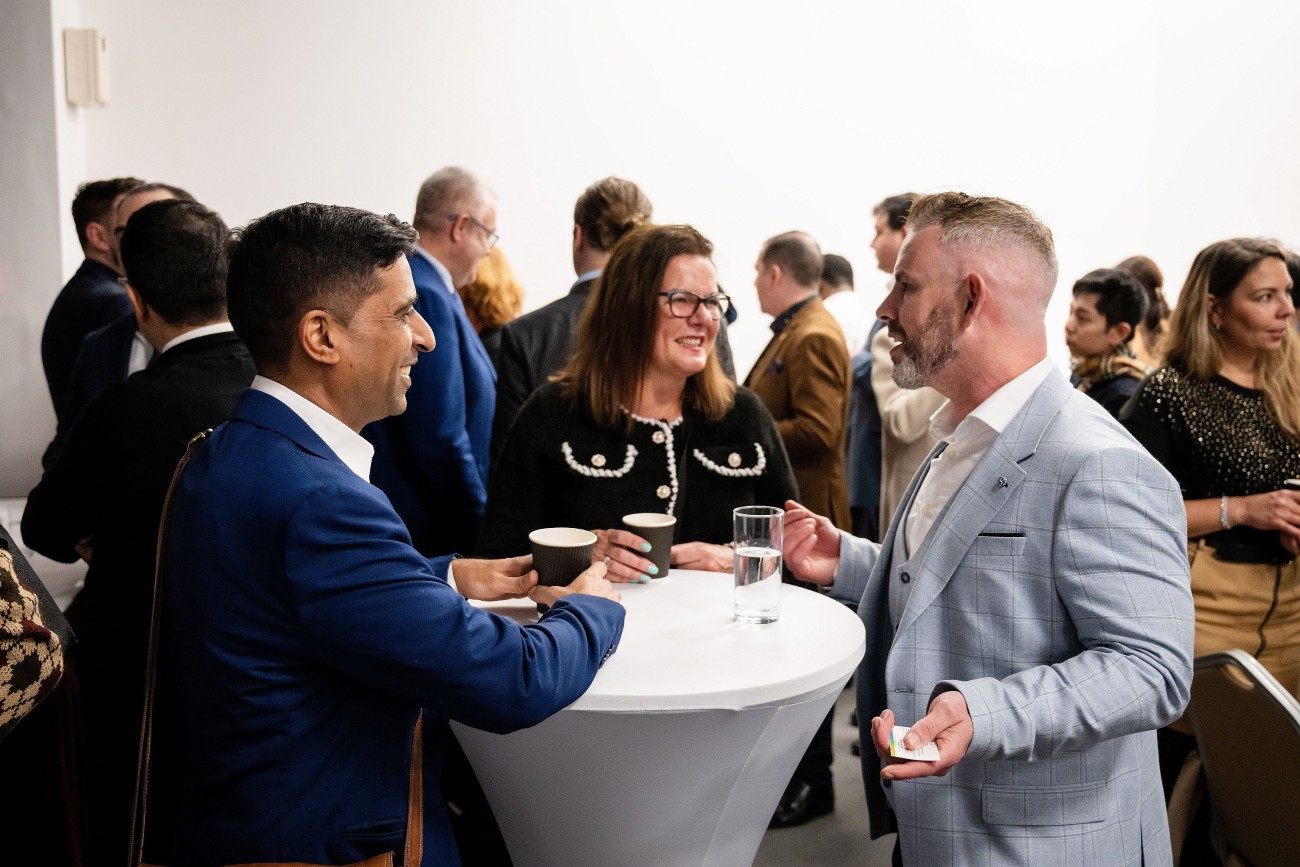
PICTURES OF THE INTERVIEW: Photos of the new community office building, Puzl CowOrKing Budapest. Source: @Puzl CowOrKing Budapest
FRONT IMAGE: Thibaut Taitinger, CEO of Puzl CowOrKing. Source: @Puzl CowOrKing Budapest